
Inclusive, OT-Informed Project-Based Learning (PBL): Strengthening Executive Function, Collaboration, and Problem-Solving in K–5 Learners
Findings from One of Two Pilot Studies Using Hands-On, Multisensory PBL Experiences in Diverse Learning Settings — using Codie Block Materials
Pilot Overview
Early Elementary PBL: Story-Based Coding & Problem Solving
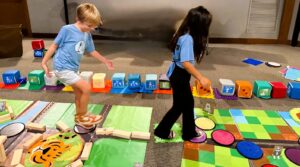
Children ages 5–6 participated in four OT-informed project-based learning sessions that integrated Codie Blocks materials, whole-body movement, storytelling, sequencing, early coding logic, spatial reasoning, and social-emotional learning cues.
This pilot was designed to explore how limited-screen, hands-on coding experiences can support executive function, communication, and inclusion in early elementary learners.
Participants & Design
- 14 children (Pre-K, Kindergarten, K–1)
- Two early elementary classroom settings
- Four 45–60 minute sessions per group
- OT-informed project-based learning format
- Physical coding blocks with a shared multi-step narrative
- Predictable routines and flexible scaffolds for diverse learners
Problem, Need & Rationale
Across early elementary grades, many children struggle with planning, sequencing, frustration tolerance, flexible thinking, and peer collaboration. These executive function and self-regulation skills are foundational for both academic readiness and social participation.
Story-based, limited-screen coding PBL offers a developmentally aligned entry point for strengthening these skills while introducing early STEM concepts in an accessible way. This pilot explored how OT-informed coding PBL can support executive function, social-emotional learning, communication, and inclusion for young learners.
Quantitative Findings
Coding Blocks Adventure Pilot Outcomes
Graph 4: Growth Across Domains (Session 1 → Session 4)
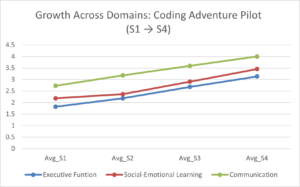
Children demonstrated consistent growth across Executive Function, Social-Emotional Learning, and Communication. Executive function showed the strongest gains, communication reached the highest end scores, and SEL followed a steady upward trajectory.
These trends reflect increasing independence, collaboration, and flexibility as children engaged in repeated story-based coding challenges.
Graph 5 Session 1 vs. Session 4 Comparison
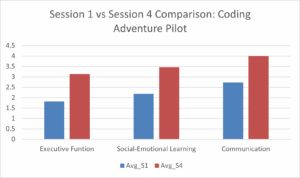
By the final session, children showed higher scores across all domains, with notable improvements in:
- Sequencing and planning
- Frustration tolerance during debugging
- Expressive communication during collaborative problem-solving
Qualitative Findings
Learning Through Movement, Story, and Collaboration
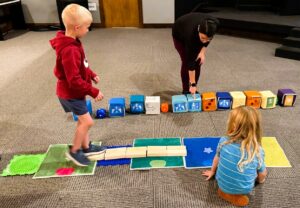
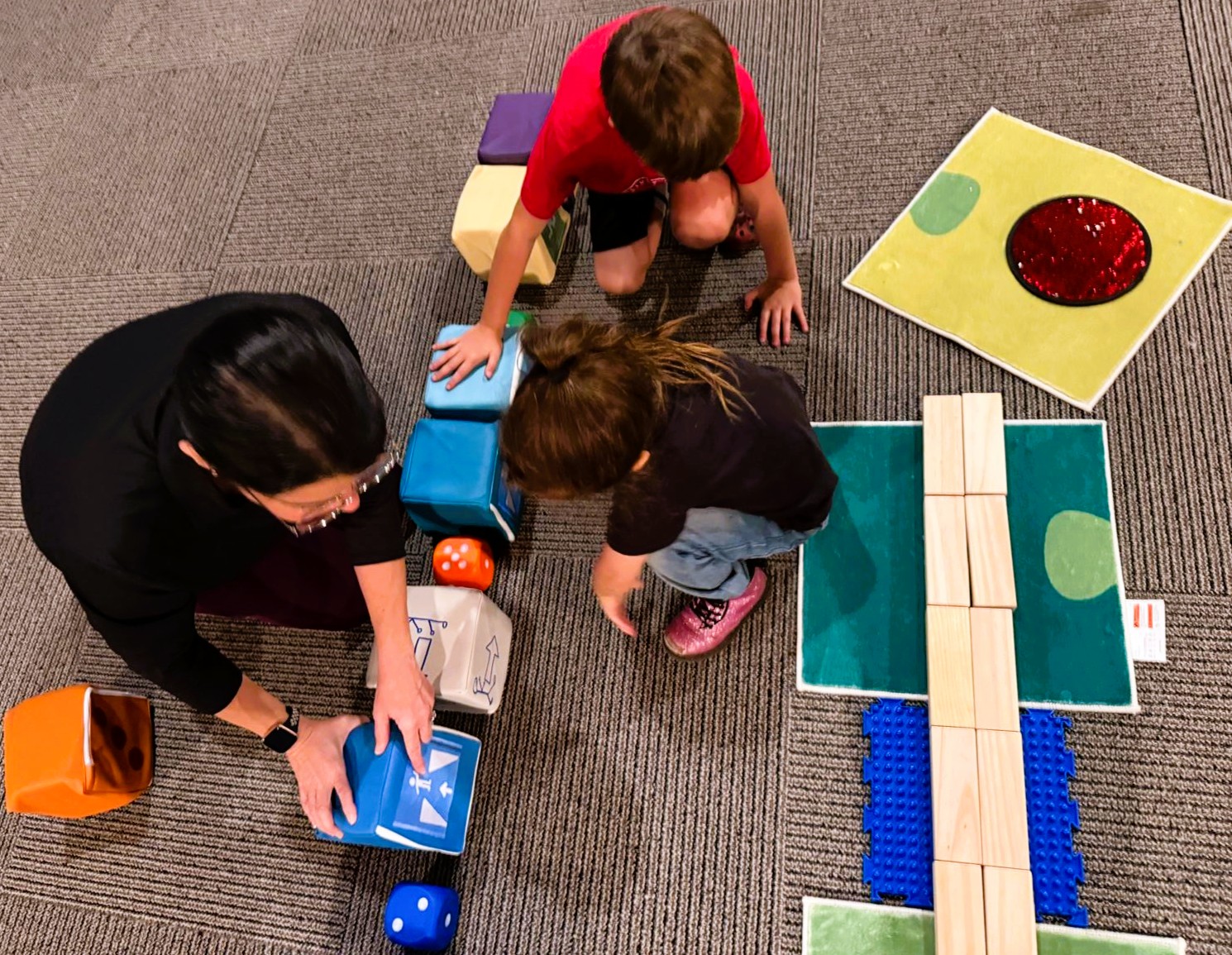
Throughout the pilot, children engaged in movement-rich, embodied coding experiences that reduced cognitive load and increased regulation. Large directional cubes, physical pathways, and narrative prompts allowed children to plan, test, notice errors, and revise solutions together.
Predictable routines, visual supports, and facilitator modeling supported participation without diminishing independence – a key OT-informed principle.
Supporting Participation for Diverse Learners
Children benefited from:
- Predictable session routines
- Visual sequencing cues
- Movement-based coding execution
- Flexible role assignments
- Narrative-driven engagement
These supports reduced frustration, encouraged flexible thinking, and enabled all children to meaningfully participate in planning, coding, and debugging.
Children’s Voices & Educator Observations
Themes Across Classrooms
- Collaboration required the most consistent adult support
- Planning and sequencing benefited from visual and physical scaffolds
- Storytelling and movement sustained engagement
- Debugging language fostered persistence and psychological safety
- Children who typically hesitated to speak initiated ideas and questions
Children’s Voices
“We fixed the bug!”
“Let’s try another way.”
“I want to tell the next part of the story.”
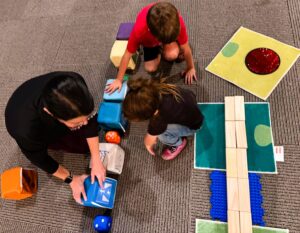
These statements reflect growing cognitive flexibility, persistence, expressive communication, and confidence.
Educator Observations
“Children who rarely speak up were suddenly offering answers.”
“Students followed sequences with intention.”
“Roles helped older learners collaborate instead of taking over.”
Implications for K–2 Schools
- Early coding strengthens executive function, SEL, and communication — not just technical skills
- Story-based, hands-on coding is developmentally appropriate for young learners
- OT-informed routines and visuals support inclusive participation
- Even very young children can engage meaningfully in computational thinking
Key Takeaway
Story-based, limited-screen coding PBL is an inclusive, developmentally aligned pathway for building executive function, communication, and early STEM readiness. With the right supports, young learners can collaborate, problem-solve, and engage confidently.